
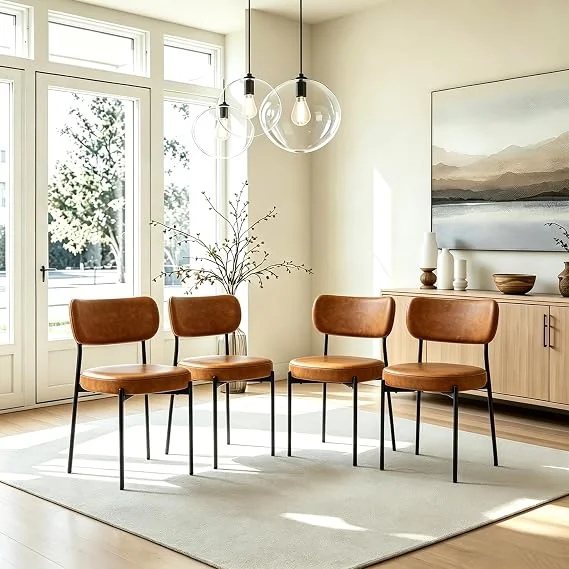
Running a busy restaurant means your furniture takes a beating every single day. Chairs are pulled out, pushed back, sat on for hours, wiped down after every service, and stacked away at closing time — only to do it all again the next morning. In that kind of environment, the wrong choice of seating can cost you far more than you saved on the initial purchase.
Leather dining chairs are one of the most practical choices for commercial restaurants across Ireland. They are easy to maintain, hold their appearance under regular use, and convey a level of quality to guests that fabric upholstery rarely achieves in a contract seating environment. However, the category is broad. Not every leather chair is built for the demands of a busy service environment, and selecting the right one requires more than a visual decision.
The following guide covers the key factors to examine before placing an order.
Frame Material Matters More Than You Think
When selecting leather dining chairs for a commercial setting, upholstery tends to receive the most attention. However, the frame absorbs the majority of physical stress. In a busy restaurant, chairs are repositioned across floors throughout each service, subjected to the full weight of guests leaning back, and stacked and unstacked on a daily basis. A frame not built to withstand this level of use will shorten the chair’s lifespan, regardless of upholstery quality.
Aluminium frames are widely regarded as the most suitable choice for commercial dining environments. Their reduced weight is a practical advantage when front-of-house staff are resetting a room between services. Structurally, aluminium offers strong resistance to cracking, warping, and the gradual deterioration that comes with sustained daily use.
Steel frames provide comparable structural performance at a generally lower price point. For venues where operational durability is the primary consideration, they are a sound and reliable option.
Solid wood frames suit certain dining aesthetics well. In high-turnover environments, however, they are more susceptible to wear. Joinery loosens over time, surface finishes chip, and legs can become uneven with extended use.
For venues where the appearance of natural wood is important to the interior, a metal frame with a wood-effect finish offers the same visual outcome with considerably greater durability. This is a practical consideration when sourcing restaurant furniture that must perform consistently over many years of service.
Which Type of Leather Is Right for Your Restaurant?
The term ‘leather dining chairs’ covers a wide range of materials, and the distinctions are significant in a commercial context.
Full-grain leather is the most durable option within the leather dining chairs category. It retains the natural surface of the hide, giving it strong resistance to wear and allowing it to develop character with age. It represents the highest investment at the point of purchase, but for venues intending to retain their seating for ten years or more, it consistently delivers the strongest return over time.
Top-grain leather has been sanded and treated to produce a more uniform surface finish. It is marginally less durable than full-grain but considerably more accessible in terms of price. For most commercial dining settings, top-grain leather performs reliably day to day and sits at a price point that makes sense for venues that want quality without committing to the premium end of the market.
Leatherette and faux leather are worth a serious look, particularly in environments where spills are a regular occurrence and hygiene cannot be an afterthought. Both wipe down easily, hold up well against moisture, and come in a wide enough range of colours to work with most interior schemes. The quality and appearance of these finishes have advanced significantly in recent years, and for many commercial dining settings, the practical benefits make them a compelling and cost-effective alternative to natural leather.
Fire Safety Certification Is Non-Negotiable
Any seating purchased for use in a commercial hospitality setting in Ireland must meet the required fire retardancy standards. When reviewing dining room chairs, confirm that the foam and fabric carry Crib 5 fire rating. This is the standard required for contract furniture used in restaurants, hotels, and public venues.
Do not leave this detail until after you have made a style decision. Confirm certification before ordering and ask the supplier to provide supporting documentation. Any reputable supplier of commercial dining chairs for sale in Ireland will have this information readily available.
Factor In Stackability and Storage
This consideration is frequently overlooked until it creates an operational problem. Restaurants that host private events, reconfigure layouts for different services, or clear the floor periodically will find stackable dining room chairs a significant practical advantage. The ability to stack four or five chairs cleanly reduces storage requirements and speeds up room turnaround between bookings.
Not all upholstered leather dining chairs are designed to stack, so if this feature is relevant to how the venue operates, confirm stacking capability before committing to a particular model.
Plan Customisation From the Outset
Restaurants with a clear interior identity need seating that supports it. A mismatch between chair style and room aesthetic is far more difficult and expensive to correct after delivery than before it.
Many suppliers of dining chairs for sale in Ireland offer a range of frame finishes and upholstery options that can be matched to an existing colour scheme or interior theme. Some carry over a hundred fabric and leatherette options, alongside multiple frame colours, including wood-effect finishes on metal frames. When investing in bespoke commercial seating, addressing customisation requirements at the specification stage can help avoid unnecessary costs and delays later on.
Frequently Asked Questions
1. What type of leather dining chair suits a busy restaurant best?
For most high-turnover restaurants, top-grain leather or a good-quality leatherette on an aluminium frame is the most sensible choice. It handles daily cleaning well, holds its appearance under heavy use, and offers solid value without overspending on materials that go beyond what a commercial environment actually needs.
2. How long should commercial leather dining chairs last?
A well-made chair on a solid frame, looked after properly, should give you anywhere between eight and fifteen years of service. How long yours last will depend on how heavily they are used and how consistently they are maintained, but quality construction at the point of purchase is what makes the difference at year ten.
3. Are leather dining chairs easy to clean in a restaurant setting?
Yes, and this is one of their primary advantages over fabric. Most spills wipe away cleanly with a damp cloth. Leatherette finishes are particularly low-maintenance and well suited to environments where hygiene is a priority.
4. Do commercial dining chairs require fire certification in Ireland?
Yes. Seating used in commercial hospitality settings must meet fire retardancy standards. Crib 5 certification should be confirmed before any purchase is made.
5. Can the colour or finish of dining chairs be customised?
Most commercial suppliers of dining chairs for sale in Ireland offer a range of frame finishes and upholstery options. If matching existing furniture or a specific interior scheme is required, ask about upholstery matching services before placing an order.